



Cement tile; the ultimate patterned tile!
15 June 2017
Cement tile; the ultimate patterned tile!
The cement tile is known for its patterns, as well as for its durability. Some patterns are very old and well known; you often come across them in old houses, castles or factories. These classic patterns are continually redesigned and reproduced. These tiles are authentic and look perfect in an old house that is being renovated.
Don't have an old house, but are you looking for a familiar pattern? How about the Escher pattern? It is known for its graphic forms, which can draw you into a game of perspective. We also have a collection of these in various colours and patterns. It is particularly striking to lay them in a large space and see the perspective change.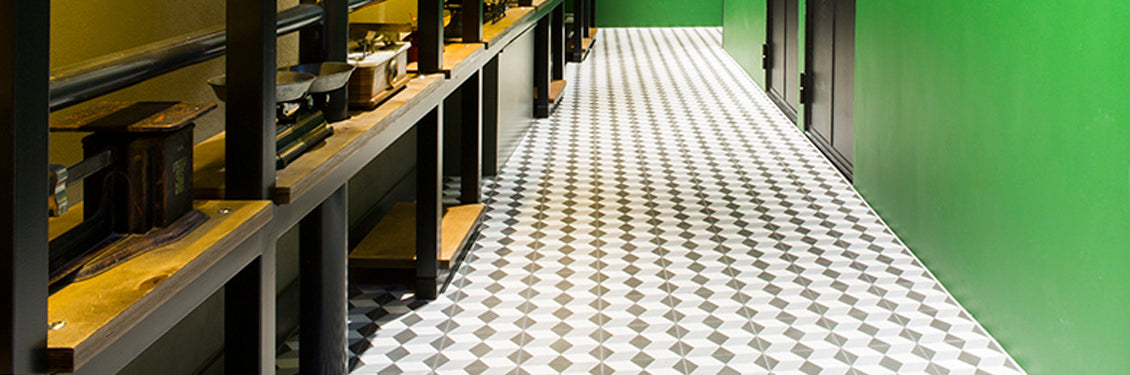
Old and new patterns: anything is possible!
As well as old patterns, we are constantly looking for new ones. These may already exist, or we may create them ourselves. My colleague Mart works on developing new patterns in different colour combinations every day. They may be based on an authentic pattern or a graphic pattern. Because one tile does not always consist of one pattern, and it can also happen that four tiles form one pattern, you do not always have to work completely symmetrically. This can create a very playful effect, but you need to find the balance between busy and playful, which is not always easy. This has not been done much with cement tiles, which is why Designtegels experiments with it so extensively.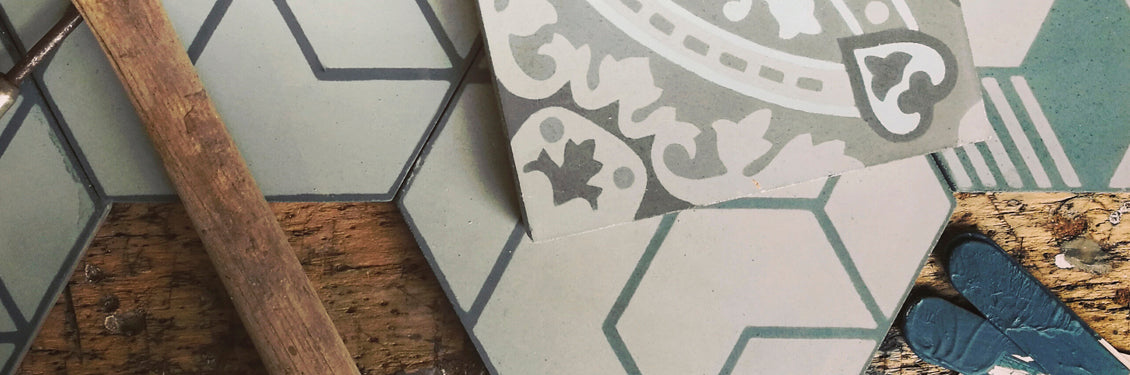
Handmade with love
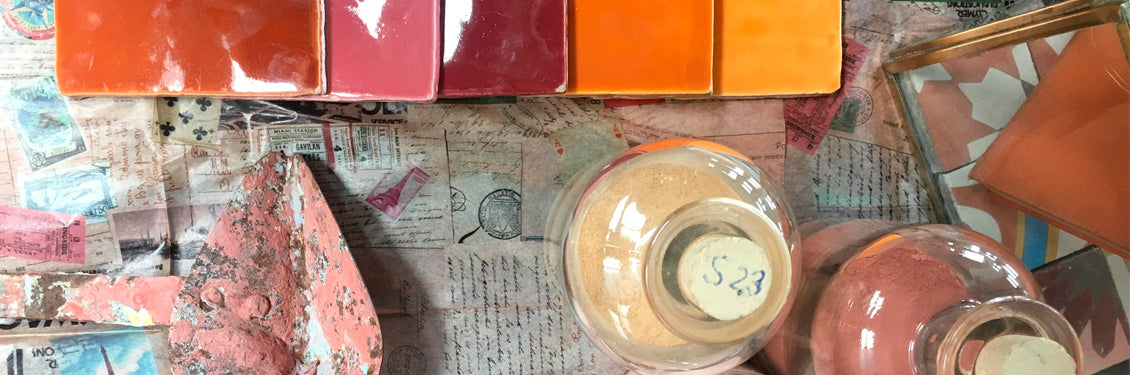
Did you know that every pattern in the factory in Vietnam is made by hand? Each new pattern is measured out within a 20x20 frame. The lead is then heated and bent by hand until the desired pattern has been created. Colours can then be poured into each frame and the tiles cast, made and pressed one by one.
 Wallpaper or tiles?
You quickly notice that patterns and prints are in fashion when you look around. At well-known interior retailers, you see more and more patterns, including authentic, Escher and new graphic patterns. Think, for example, of your tea towels, duvet covers, curtains, crockery or wallpaper.
These days, it is fashionable to experiment a little more, not only with the pattern but with the tile too. The hexagon is a good example: hexagons are appearing all over the world, and designtegels.nl also has a special collection of them. These hexagon tiles work particularly well with graphic patterns, creating a double graphic effect! Colour can also make a significant difference here: one tile may work with just two colours, while another may have as many as eight.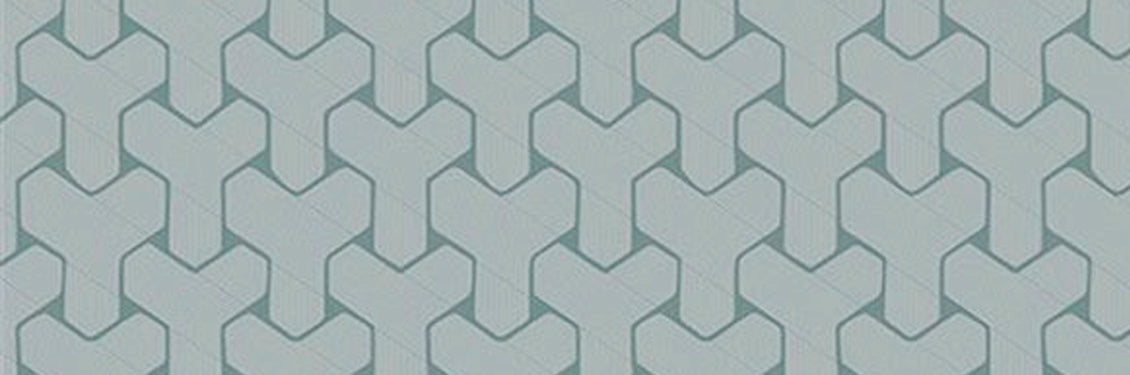
What will you choose?
Customers often find it difficult to see a pattern as a whole. Too busy, too colourful or too graphic. Of course, the tiles are intended to remain in place for a long time. As a result, customers quickly choose a familiar, authentic pattern because it feels familiar and safe. If you find this difficult, take a look at wallpaper. It sometimes has even busier prints, yet many people still put them on their walls. I even think that wallpaper is more prominent than a tiled floor. Because a floor is horizontal and the pattern is softened by sufficient sunlight, while on a wall the pattern actually stands out more.